
French cinema offers a wealth of material for language learners, from the schoolyard conversations of Le Petit Nicolas to the street slang of La Haine. Some films are particularly good for picking up everyday expressions, while others demand a closer ear for irony, regional accents or rapid dialogue.
The following ten films are arranged roughly by difficulty, from beginner to advanced, using the Common European Framework of Reference for Languages (CEFR). The suggested levels are a guide to the difficulty of the dialogue, assuming subtitles are used where needed.
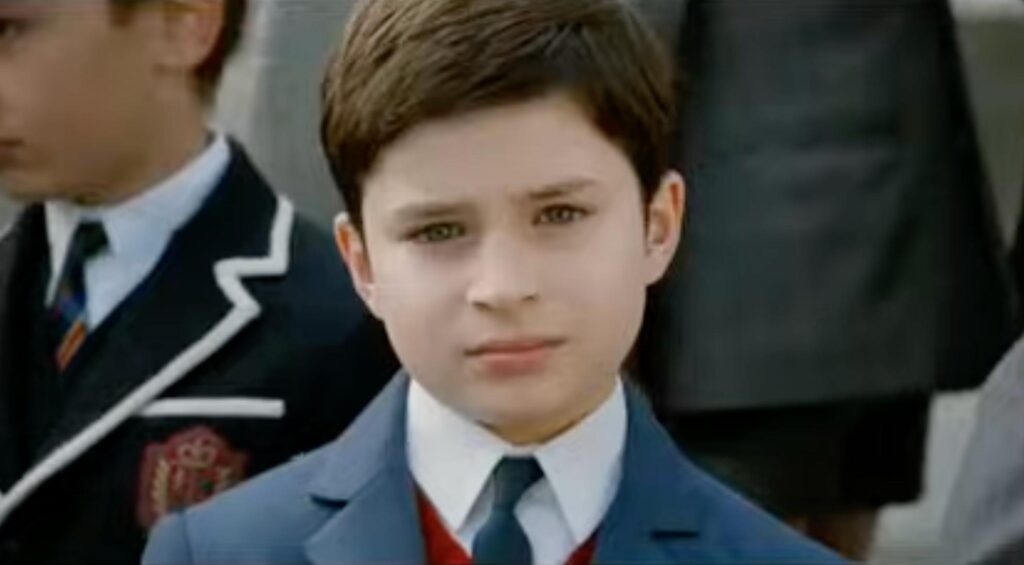
1. Le Petit Nicolas (2009)
Suggested level: A1–A2 | Comedy | Director: Laurent Tirard
Adapted from the children’s books by René Goscinny and Jean-Jacques Sempé, Laurent Tirard’s comedy follows a schoolboy whose misunderstandings lead to trouble at home and in the classroom.
Much of the dialogue revolves around family, school and friendship. Familiar situations and visual humour help beginners follow the action even when they miss some of the words.
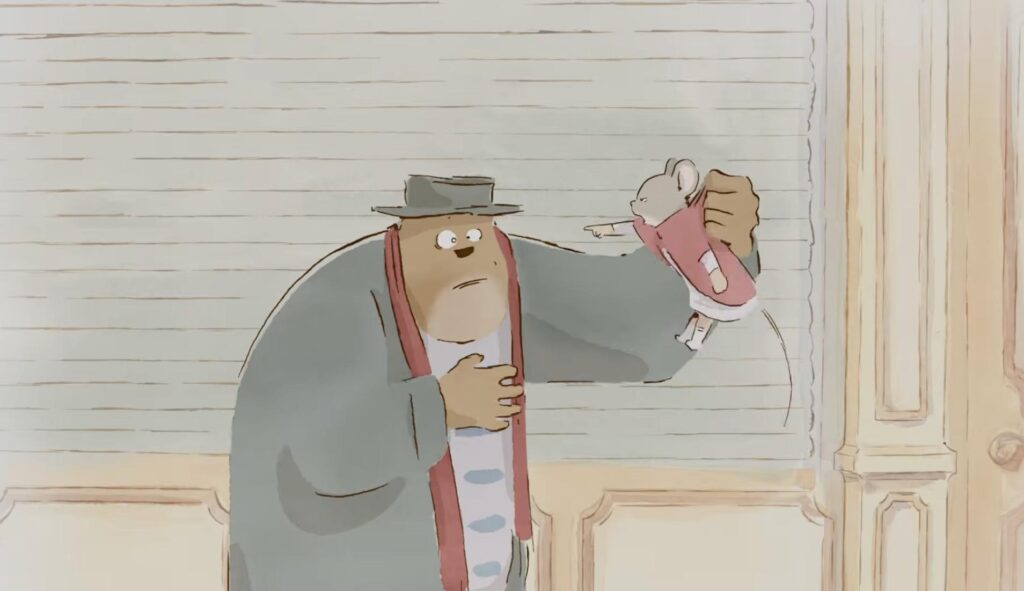
2. Ernest et Célestine (2012)
Suggested level: A1–A2 | Animation | Directors: Stéphane Aubier, Vincent Patar and Benjamin Renner
A bear and a little mouse strike up an unlikely friendship in this animated film. The expressive characters and clear visual storytelling make it easier to follow conversations without constantly consulting a dictionary.
The language is particularly useful for learning how to describe feelings, express wishes and talk about everyday situations.
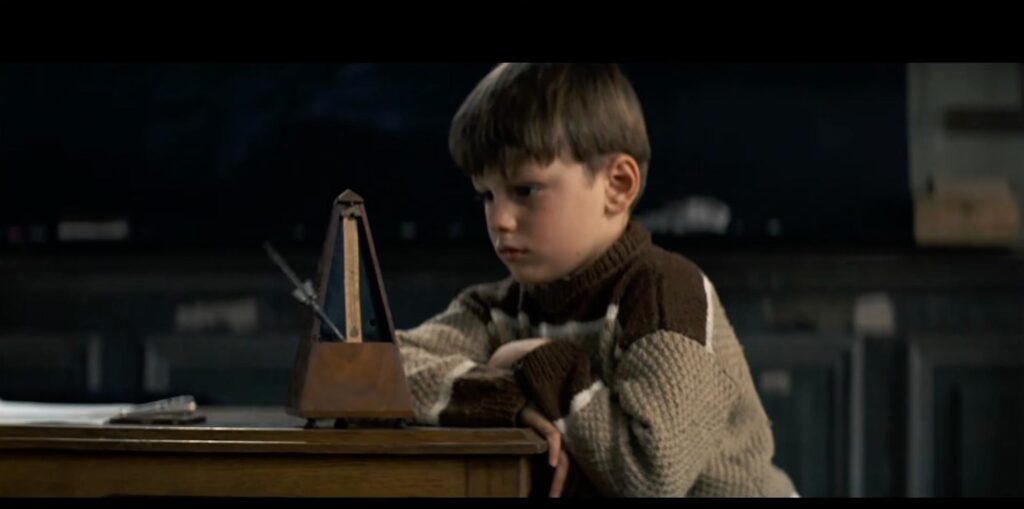
3. Les Choristes (2004)
Suggested level: A2–B1 | Drama | Director: Christophe Barratier
Set in a boys’ boarding school, Les Choristes follows a music teacher who finds a way to reach his pupils by forming a choir.
The classroom scenes introduce the language of instructions, discipline and encouragement, while conversations between teachers and pupils reveal differences between formal and informal speech. The songs offer further opportunities to become familiar with French pronunciation and rhythm.
4. Intouchables (2011)
Suggested level: B1 | Comedy-drama | Directors: Olivier Nakache and Éric Toledano
Inspired by a true story, Intouchables centres on Philippe, a wealthy man with quadriplegia, and Driss, the young man he hires as his carer.
The contrast between their ways of speaking is one of the film’s great strengths. Their banter is full of informal expressions, quick replies and jokes. For intermediate learners, it is a useful introduction to the rhythms of everyday spoken French, although some of the slang may take longer to grasp.

5. Le Fabuleux Destin d’Amélie Poulain (2001)
Suggested level: B1–B2 | Romantic comedy | Director: Jean-Pierre Jeunet
In Jean-Pierre Jeunet’s portrait of Montmartre, a young Parisian woman quietly intervenes in the lives of those around her.
Known internationally as Amélie, the film is distinguished by its playful narration, attention to small details and unusual descriptions of its characters. Its voice-over is especially rewarding for learners looking to expand their descriptive vocabulary, though the speed and complexity of some passages can be challenging.

6. La Famille Bélier (2014)
Suggested level: B1–B2 | Comedy-drama | Director: Éric Lartigau
Paula is the only hearing member of her immediate family. When she discovers a talent for singing, she must decide whether to pursue her ambitions or remain close to the family that relies on her.
The exchanges between Paula, her relatives and her teachers bring together the language of family life, education and personal aspirations. The film also depicts communication in French Sign Language alongside spoken French.

7. La Haine (1995)
Suggested level: B2–C1 | Social drama | Director: Mathieu Kassovitz
Mathieu Kassovitz’s landmark drama follows three young men over 24 hours in and around a Parisian suburb, against a backdrop of police violence and social inequality.
The dialogue is fast, confrontational and rich in slang, including verlan, a form of French slang that reverses syllables. It offers a particularly revealing example of how speech varies with age, social background and setting. Some expressions are specific to the period and milieu of the film.

8. Le Prénom (2012)
Suggested level: B2–C1 | Comedy-drama | Directors: Alexandre de La Patellière and Matthieu Delaporte
A dinner among friends and relatives takes an unexpected turn when the proposed name of an unborn child sparks an argument.
Much of the comedy depends on sarcasm, wordplay and the timing of the characters’ replies. Conversations overlap, interruptions are frequent and apparently innocent remarks carry double meanings. For advanced learners, Le Prénom is an excellent introduction to the subtleties of French conversational humour.
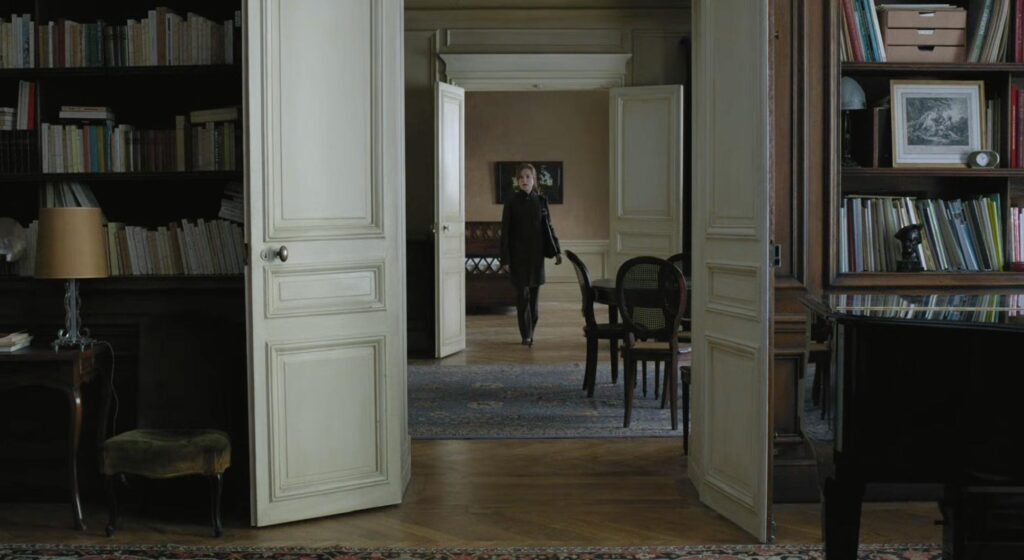
9. Amour (2012)
Suggested level: C1–C2 | Drama | Director: Michael Haneke
Winner of the Academy Award for Best Foreign Language Film, Michael Haneke’s Amour portrays an elderly couple confronting illness and the realities of ageing.
Unlike the rapid exchanges in La Haine or Le Prénom, the conversations here are often quiet and measured. The difficulty lies less in the pace of the dialogue than in its emotional undertones, hesitations and unspoken implications. Learners may find the literal meaning accessible well before they appreciate its full nuance.
10. Un prophète (2009)
Suggested level: C1–C2 | Crime drama | Director: Jacques Audiard
Jacques Audiard’s prison drama follows Malik, a young inmate who gradually learns to navigate the hierarchies and shifting alliances of prison life.
The film presents a demanding mixture of slang, different accents, prison vocabulary and abrupt exchanges. Much of what is said depends on context and the relationships between characters, making it a particularly challenging choice for advanced learners.
Getting more out of French films
For beginners, subtitles in a familiar language can make the first viewing more manageable. Once the plot is familiar, revisiting a short scene with French subtitles can help establish the connection between written and spoken French.
Intermediate and advanced learners can try watching without subtitles, returning to difficult passages afterwards. Rather than recording every unfamiliar word, focus on expressions that recur or that you could use in conversation. Repeating a few lines aloud is also useful for practising pronunciation and intonation.